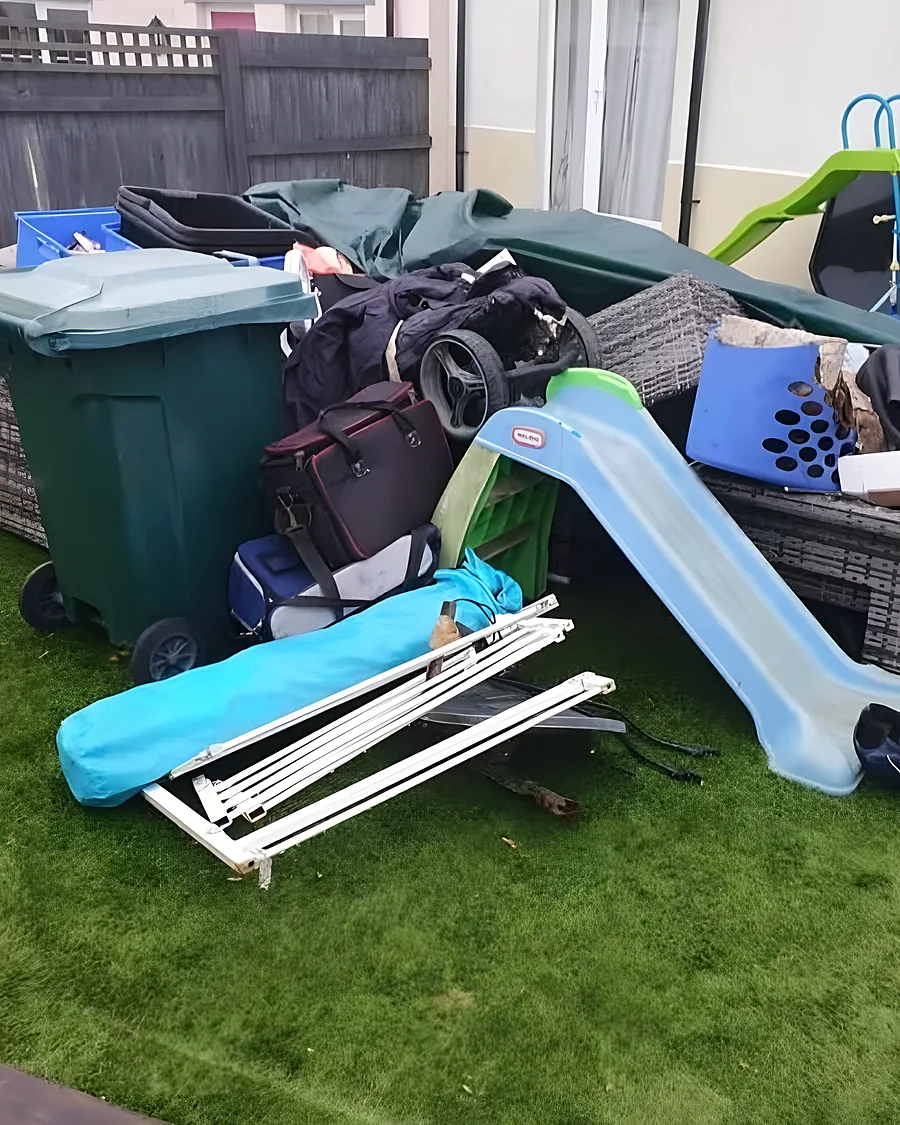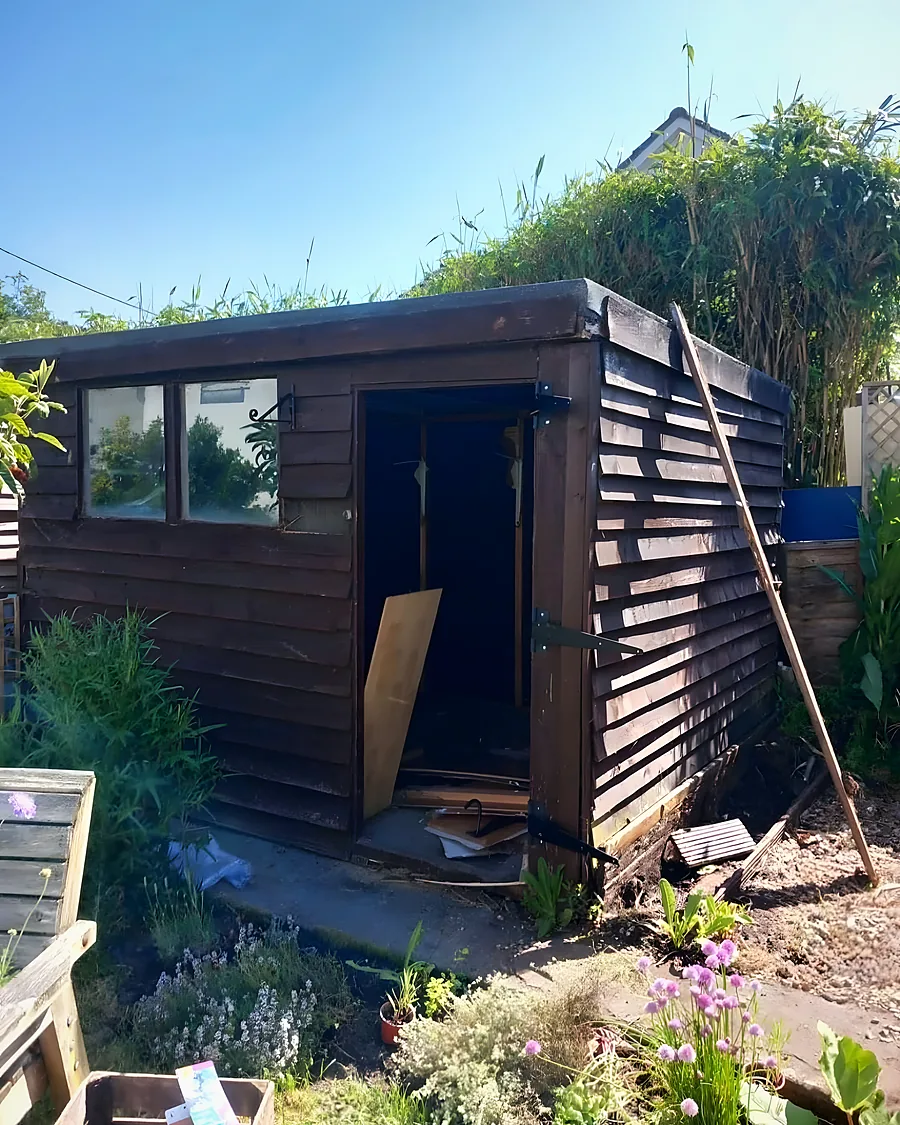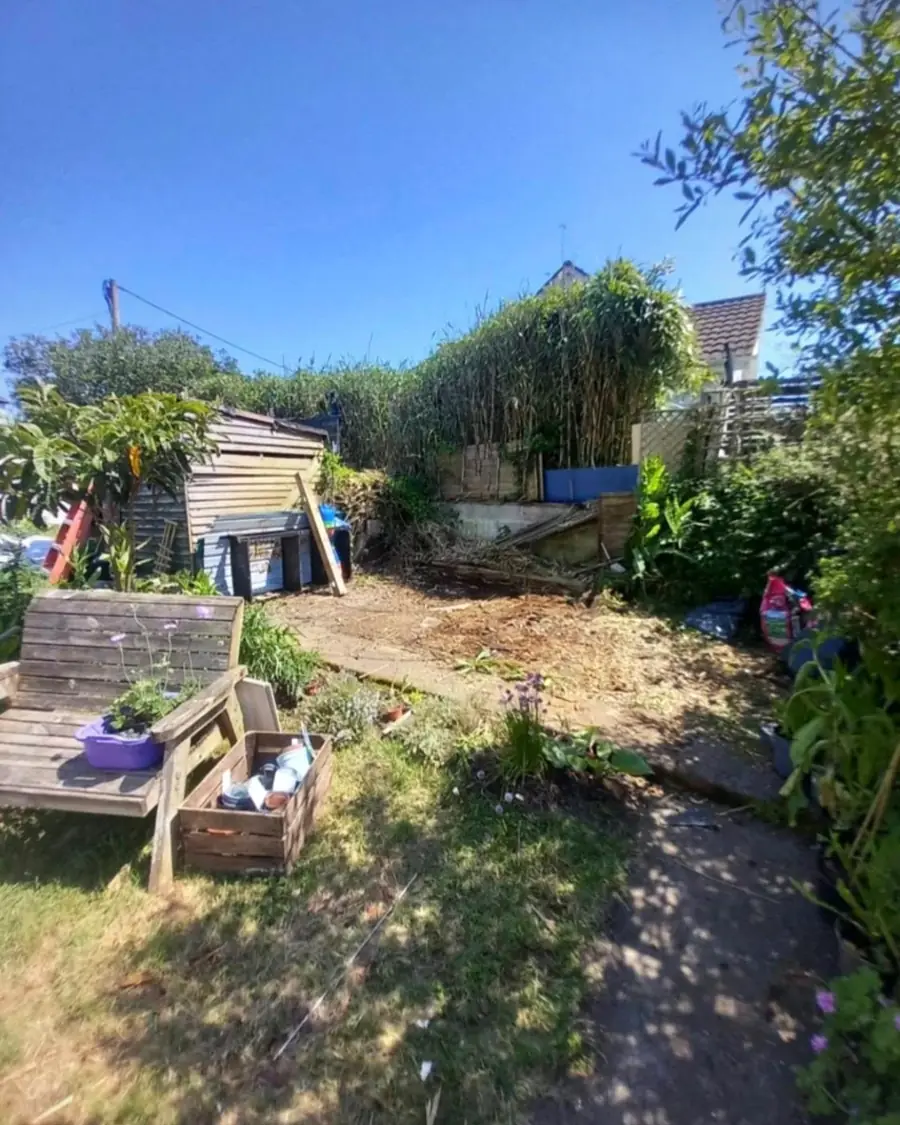
An overgrown garden is cleared in an order: the loose things out first, then the long growth cut down, then the woody stuff, then the roots, and the waste taken away as you go rather than left in a heap.
How do you clear an overgrown garden?
Take out what is lying in it first, then cut the long grass and brambles back to ankle height with a brushcutter, then deal with the shrubs and roots by hand. Bag or pile the waste as you go. Complete Waste Management clears the lot in one visit, strimmed, cut, loaded and taken away, with the ground left bare.
Where to start
Walk it before you touch it. Find the edges of the lawn, the line of any path, the beds that were planted on purpose and the things you want to keep: a tree, a shed that is still sound, a bench, the raised beds. Everything else is coming out, and knowing that first stops you clearing round things you were going to remove anyway.
Then take out whatever is lying in it. Garden furniture, pots, a rotten fence panel, a trampoline frame, the bags somebody left by the shed. The growth is easier to cut with nothing hidden in it, and a strimmer wrapped round a length of wire is how the day stops.
The order
Long grass and brambles come down first, with a brushcutter or a strimmer with a blade, cut to ankle height and raked into piles as you go so you can see the ground. Shrubs and small trees are next, cut back to a stump with loppers and a saw. Then the roots. Bramble roots lift with a fork once the top growth is gone; ivy on a fence is pulled while it is green; anything woody that is staying is pruned, not stripped. Strim it again a week later: the second cut is the one that makes it look like a garden.
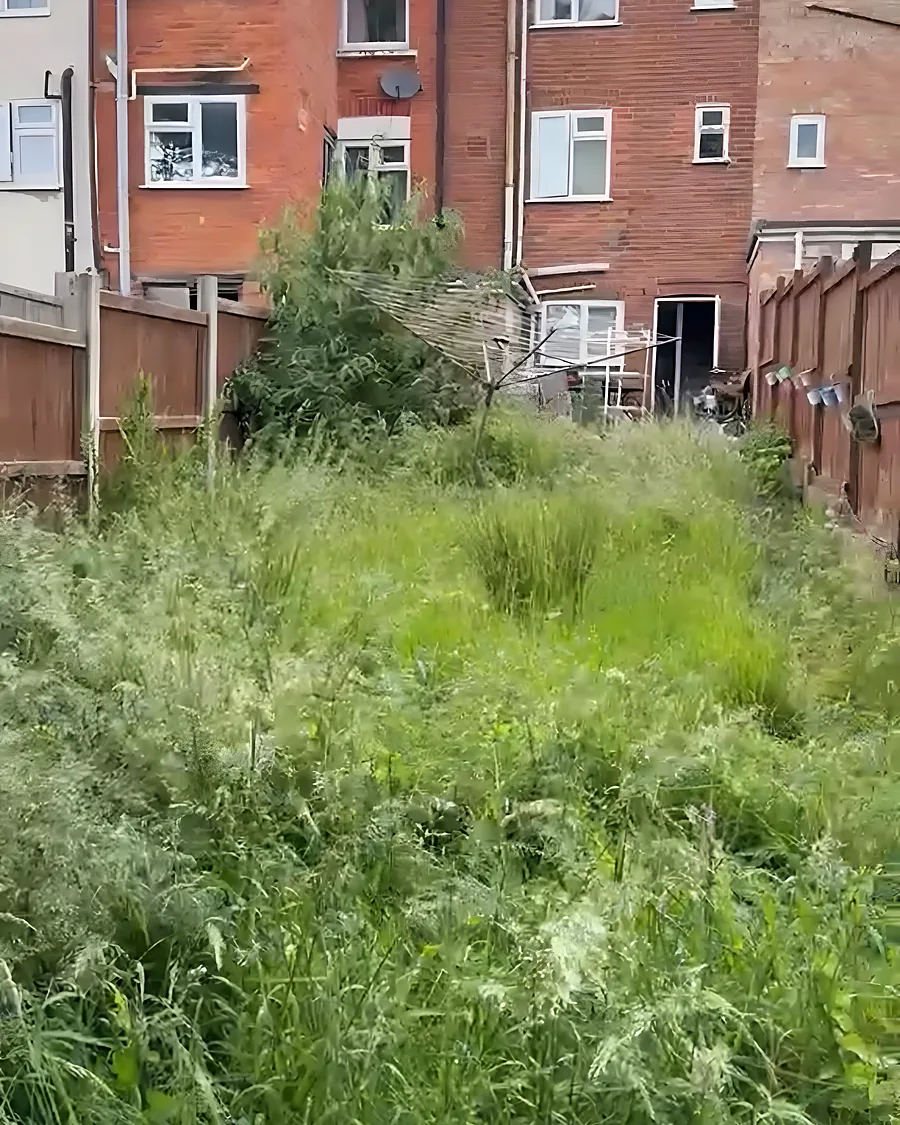 Before
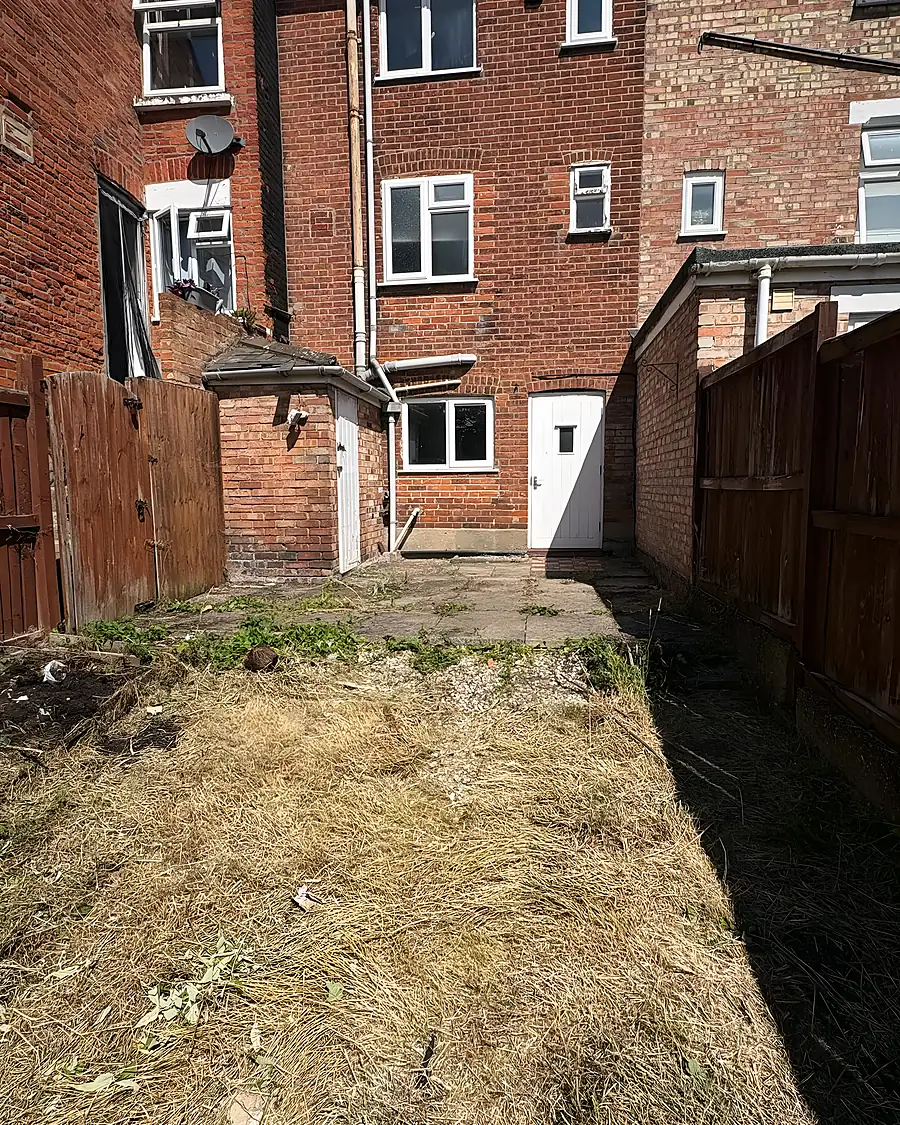 After
What is hiding in it
Two things change the plan when you find them. The first is a nest. Hedges, dense shrubs and ivy are nesting sites between early spring and late summer, and it is an offence to destroy a nest in use, so look before you cut, and if there is a nest in it, that hedge waits. The second is Japanese knotweed, a tall cane with heart-shaped leaves and a hollow, bamboo-like stem. Cutting it and putting it in with the rest of the waste spreads it, and the law on moving it is strict, so if you think you have it, stop and read the government's guidance on Japanese knotweed first.
What to do with it all
This is the part that beats most people, because an overgrown garden produces far more waste than it looks like it will. A small lawn gone to seed with a bramble patch at the back fills more bags than you own, and the woody cuttings do not go in the council garden bin at all once they are over the council's size limit. Grass, leaves and soft green cuttings go in the garden bin or on a compost heap. Woody cuttings, roots, turf and the furniture and junk that came out first need the tip or a collection, and the tip means a car boot at a time, booked ahead, with a van or a trailer needing a permit at most sites. Our guide to how to get rid of garden waste goes through each route and what it takes. Whatever you do, do not leave the piles. A heap of cut brambles roots again where it sits, a pile of grass cuttings turns to slime, and a garden that was cleared on a Saturday looks worse by the following month than it did before. Bag it as you go, or have it all taken away the same visit it is cut, so that the ground is bare and the job is finished rather than moved.
When to have it cleared
A garden that has gone for a few seasons is a day's work for us with the right kit, and the difference is the waste goes on the truck as it is cut, not into a heap. We strim and cut it down, take out the junk, the furniture and the fencing, and leave the ground bare and swept, with cuttings, turf and old slabs in the same load. The quickest way to a price is a photo on WhatsApp to 07523 280964, taken from the back door so the whole garden is in it, and the price comes back in writing before anything is booked. Nothing is paid until the job is done. The load prices are on our garden clearance page.