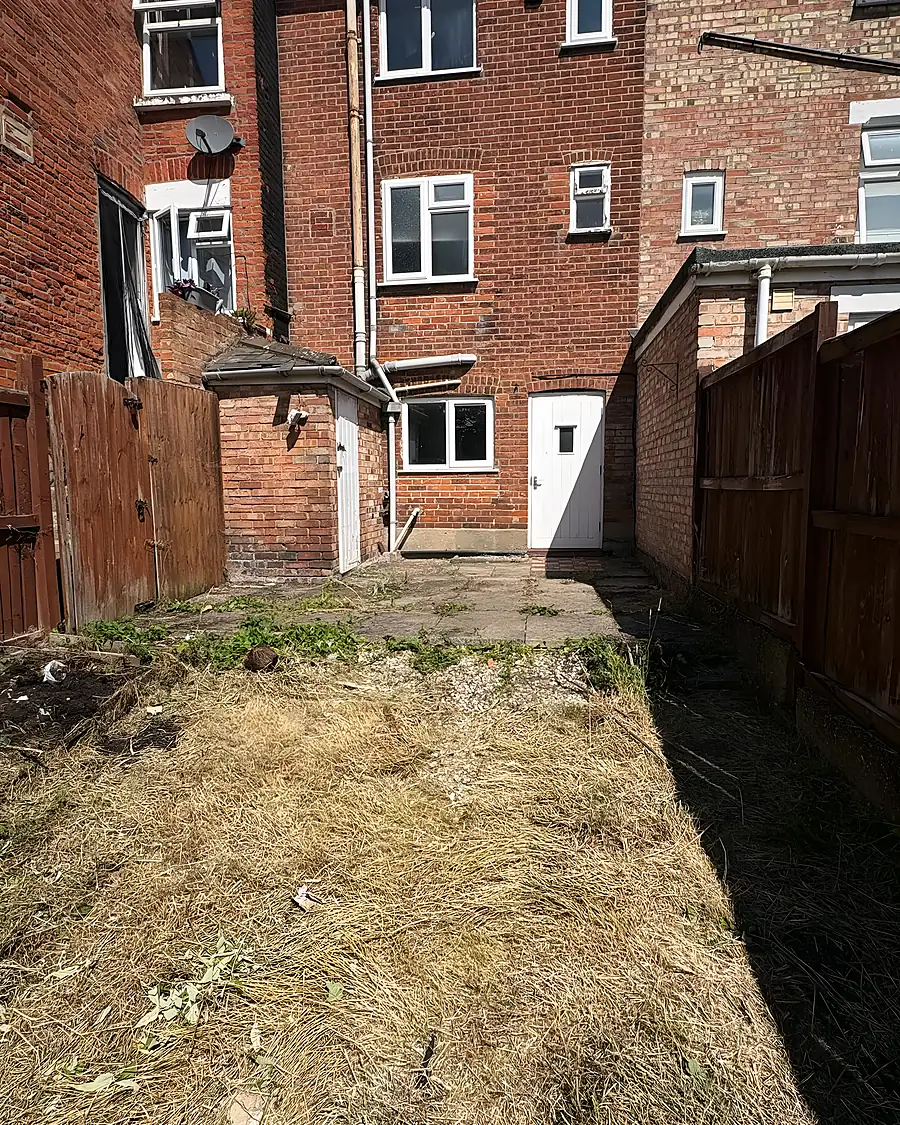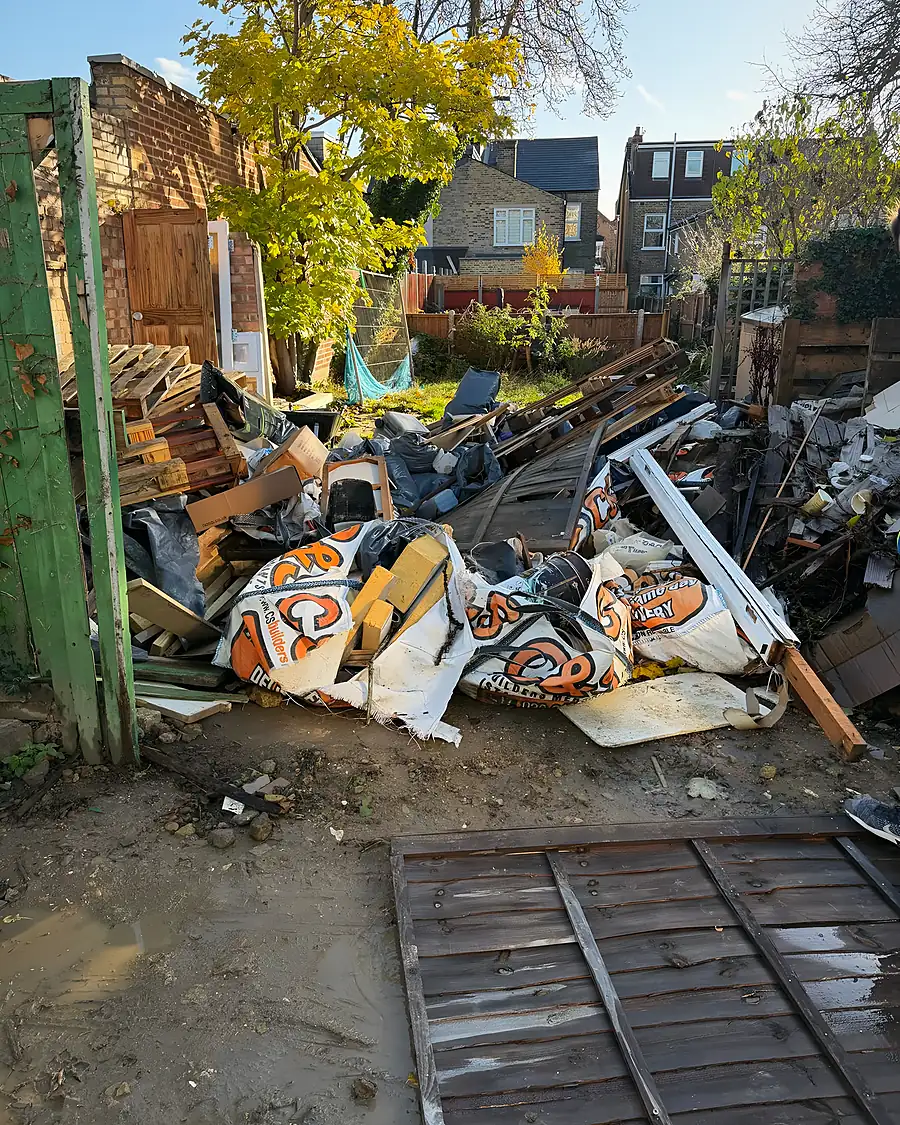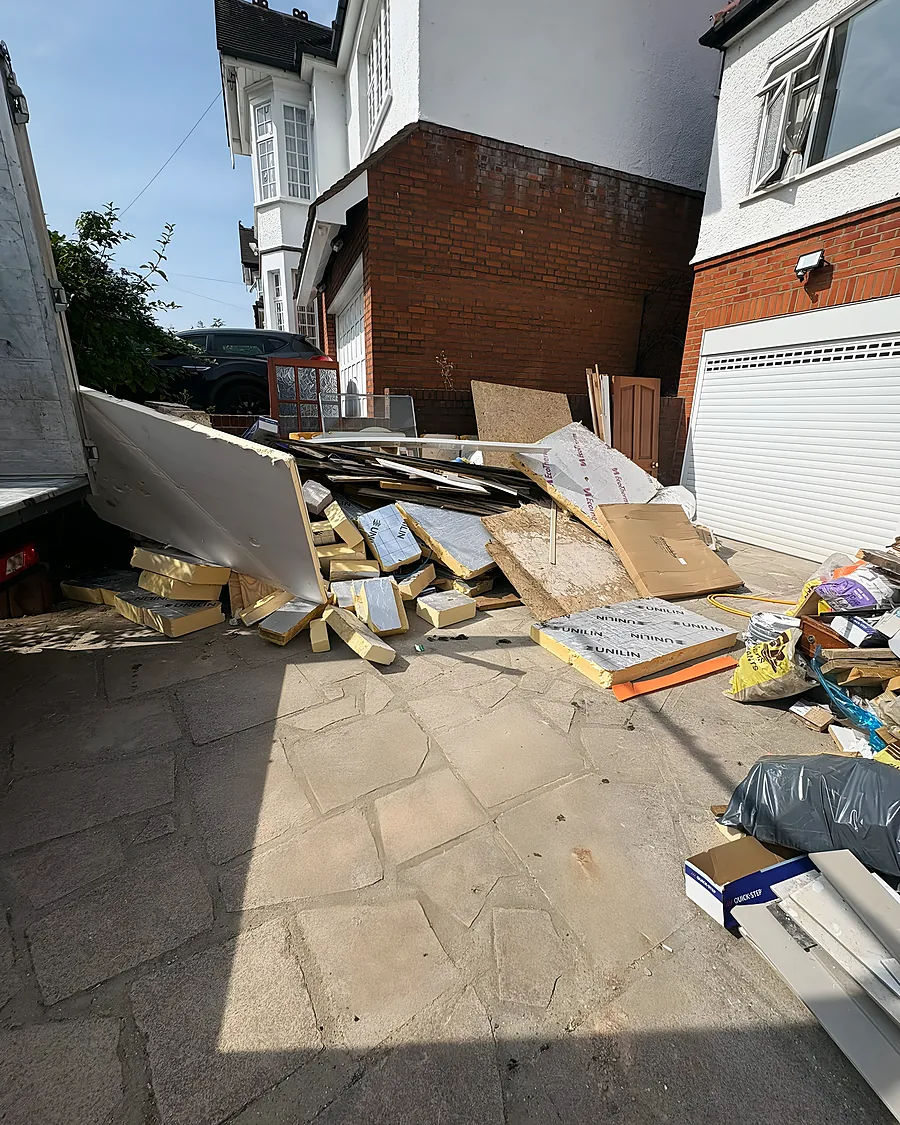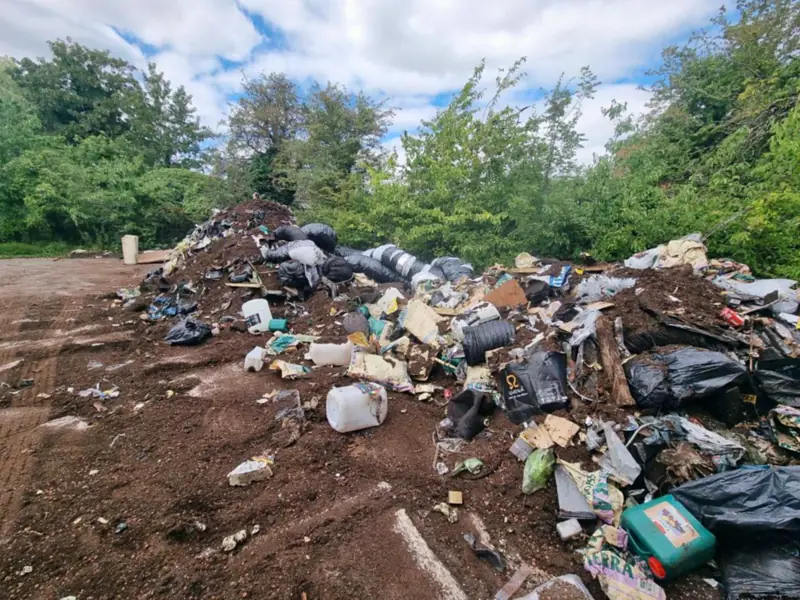
Fly tipping is dumping waste on land that has no permit to take it, from one bag on a verge to a lorry load in a field, and it is a criminal offence.
What is fly tipping?
Fly tipping is the illegal dumping of waste on land, from a mattress left by a bin store to a lorry load tipped in a gateway. The council clears it from public land. On private land the owner has to, which is where Complete Waste Management comes in: we lift it, load it and sweep the ground back.
The offence
The law calls it depositing controlled waste on land without a permit: a sofa left beside a bin store, bags of rubbish on a verge, a builder's rubble in a gateway, or a whole lorry load tipped in a field at night. It makes no difference whether the land is public or private, and no difference whether the waste is harmless or hazardous. Size and type decide how seriously it is dealt with, not whether it counts.
Most of it is household waste, and a lot of it starts with somebody paying a cheap man with a van who never had anywhere legal to take it.
The council's part
On a road, a pavement or a park the council clears it, and every council has a page for reporting it. The council does not clear it from private land. A big tip, a hazardous one or one that is part of an organised run goes to the national regulator instead, and GOV.UK's page on reporting fly-tipping says which is which.
The fines
For a small fly tip a council can issue a fixed penalty of up to one thousand pounds. Anything bigger goes to court, where there is no upper limit on the fine, the vehicle used can be taken, and a case serious enough for the Crown Court carries up to five years in prison. The driver, the person who sent them and the business behind them can all be charged.
Your own rubbish
The person whose rubbish it was is on the hook too. A householder has a legal responsibility to take reasonable steps to make sure their waste goes only to someone entitled to take it. If a man with a van takes it for cash and tips it in a lane, the council can trace it back to you from an envelope in the bags and issue a fixed penalty of up to six hundred pounds, or prosecute. The protection is simple: ask for the waste carrier registration number, check it on the government's public register of waste carriers, and keep the receipt.
Complete Waste Management is a licensed waste carrier, registration CBDU663075, in the company's own name.
Private land
When somebody dumps waste on land you own or rent, the cost of getting rid of it lands on you, even though you had nothing to do with it. The council will take a report and may investigate if there is evidence, but it will not clear it, and if it sits there it can serve a notice requiring you to remove it. A tip in a gateway or a car park also attracts more, because the next driver sees a place where nobody minds. The practical order is this. Do not go through it beyond what you can see from the edge, because an address on an envelope or a label on a drum is the evidence the council needs. Photograph it from several angles with the ground around it in frame, note the date and anything you saw, and report it to the council straight away so there is a record, which matters if the tipper is caught and the cost is claimed back. Then have it cleared by a licensed waste carrier, who gives you a waste transfer note, so that your land is not the start of a second offence.
 Before
 After
The clearance
The quickest way to a price is a photo on WhatsApp to 07523 280964, with the ground around the pile in it so the way in is clear. The price comes back in writing before anything is booked. On the day we lift it all, by hand where that is the only way, load it and sweep the surface back, and take before and after photographs from the same spot if you want them for a report. Anything we cannot carry, such as asbestos or chemicals, we tell you about straight away. Whatever can be recycled is recycled, and nothing is paid until the job is done. The load prices are on our fly-tipping clearance page.